Showing posts with label Content. Show all posts

Wednesday, January 4, 2017

AdSense - Eligibility For Ads Is Based On Content

Many blog owners want the legendary wealth, from publishing a Blogger blog, and adding AdSense ads.

Not everybody understands the AdSense review process - and the fact that "Congratulations!" is only the beginning.

There are actually 4 steps in the review process, which must complete successfully, to provide paying ads for your blog.
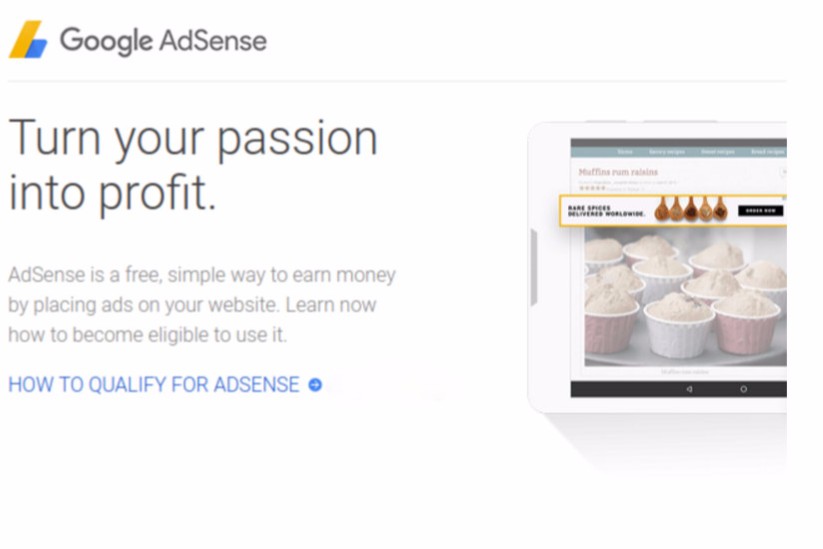

This is what you see, with a new blog.


Each review step follows the previous step, one by one.

  1. Automated blog size analysis.
  2. Manual ad placement and content analysis.
  3. Automated blog content analysis.
  4. Automated assignment of available ads to blog pages.

Automated blog size analysis.

With a Blogger hosted AdSense account, Blogger checks each blog, periodically. When your blog is eligible to apply for AdSense, based on age and size, you see the legendary "Congratulations!" offer.


This is what you see, with an eligible blog.


You now have a working "Earnings" dashboard page - and can select ad placement options, and apply.


You have to place ads, before you apply, and evaluation can start.


This is the beginning of your road to riches - but only the beginning.

Manual ad placement and content analysis.

After you position the ads and apply using "Earnings", you wait for approval during the "2 to 3 week" evaluation period. Until people decide that the blog is well written, with consistent and easy navigation, and properly located ads - and contains material that is informative, interesting, and unique, AdSense won't place paying ads in the blog.

Any ads visible, after you select ad placement, will be public service announcements. You won't earn any money, with PSAs displayed. Some blog owners will see blank spaces, where ads are supposed to appear.

Automated blog content analysis.

Following approval, the AdSense crawler has to analyse post content, so actual paying ads can be chosen.

If content cannot be analysed, paying ads can't be chosen.

The AdSense crawler can't navigate this blog, with numbered pages.


Blogs that use JavaScript, to link pages, are a problem when the blog is being crawled. This includes the Blogger dynamic templates, and some "Responsive" class templates - and third party templates with features like numbered pages.

Post content only accessible behind JavaScript can't be read, by the AdSense crawler. You may receive a rejection, based on "difficult navigation" or "inaccessible content".

Automated assignment of available ads to blog pages.

Following post content analysis, available paying ads are assigned, on a page by page basis. AdSense won't sell ads for prohibited or unwanted content.

If paying ads are not available, to match the content as analysed, the blog won't get paying ads - and won't make money.

The bottom line.

Until actual paying ads are placed into the blog, you can't start to make money. And paying ads won't be added, until the blog is ready.

As usual, I'll advise you to start a blog with informative, interesting, and unique content - published regularly. And keep publishing, frequently.

And, wait patiently.


Some new #Blogger blog owners setup their blogs - and wonder, immediately, why they aren't seeing paying ads on their blogs. They fail to understand that ads only appear on blogs after several careful evaluation processes.

Saturday, June 4, 2016

AdSense, And Blogger, Require Quality Content

We see questions about content requirement, in both AdSense Help Forum: Blogger / Host Partners, and in Blogger Help Forum: Get Help with an Issue.
My blog was just deleted, as a spam host! I Don't publish spam!
and
Why can't I get my Earnings button activated? My blog is over a year old, and contains hundreds of posts!!
Neither blog owner publishes a blog which contains blatant unwanted commercial content - or hacking or porn. But neither blog is suited for hosting AdSense ads, either.

As the web becomes saturated with people publishing, without a proper plan for content source or for subject, Google is trying to encourage quality content.

Both AdSense and Blogger want people to publish blogs which are worth reading - because blogs that are worth reading get traffic - and deliver customers who view the ads published by AdSense. And AdSense wants to keep their ecosystem healthy, to encourage quality advertising.


AdSense wants the best content - to encourage the best ads, and the best ad compensation. And AdSense only places paying ads on blogs which contextually match available ads.

Blogger wants original, well written content. This encourages people to read the blog - and tell their friends about it. And more readers encourage more writing by the owner.


If you read through the AdSense Support Forums, you'll find mention details of other problems - not always stated in the AdSense Help references. Some blogs, of high quality, may not always get ads - because there are higher quality blogs, and not enough ads available.

  • Ad placement and quantity.
  • Adult / Mature content.
  • Biography / fiction / lyrics / poetry.
  • Classroom / coursework blogs.
  • Cryptocurrency / financial advice.
  • Diet / health / medications blogs.
  • Food / recipe blogs.
  • Get rich quick / MMF / MMH / MMO blogs.
  • Poor grammar.
  • Graphic violence blogs.
  • Images / photos / pictures blogs.
  • Job blogs.
  • Mixed content blogs.
  • News blogs.
  • Prohibited content.
  • Scraped / syndicated content.
  • Stolen content.
  • Tech blogs.
  • Video (YouTube) blogs.

Ad placement and quantity.

AdSense has very high standards about how ads are featured on the blog - and how many ads may be present on the blog. The total number of ads - both AdSense and third party - should be limited.
Advertising and other paid promotional material added to your pages should not exceed your content. Furthermore, the content you provide should add value and be the focal point for users visiting your page.
And showing ads in popup windows, and other imaginative techniques, is strictly forbidden.

Your posts are what attracts your readers - not the ads. The ads are merely decorations.

Adult / Mature content.

AdSense is a family-safe service. If you're familiar with the MPAA Rating System, you should consider AdSense as firmly limiting content to "G" or "PG".

Google ads may not be placed on pages that contain pornography, adult, or mature content.

A blog with anything resembling "R" or "X" / "NC-17" is unlikely to get paying ads.


Biography / Fiction / Lyrics / Poetry blogs.

The beauty and usefulness - of fiction, lyrics, and poetry - is in the eye of the author. Neither biographies, fiction, lyrics, or poetry have any value for advertisements.

Fiction (content written by the blog author) follows the rules of the author, for content. Poetry follows the rules of the blog author, for formatting and phrasing. Lyrics (words, to accompany music) follow the rules of the music.

Neither fictional content, lyrics, or poetry can be properly analysed by the AdSense crawler - and paying ads cannot be assigned, to fiction, lyrics, or poetry. Fiction, music, and poetry - if it has any commercial value - is protected by copyright / DMCA, and can't be monetised.

None of this exclusion includes book reviews, however. Well written book reviews - content discussing poetry, fiction, and / or non fiction written by other people - are useful, when accompanied by substantial commentary by the blog author.

Classroom / coursework blogs.

Blogs which provide exam result lists, answers to previous exams, study guides, and / or promote sale of pre written term papers are loosely termed "coursework". This is mentioned, in Prohibited Content: Content that enables dishonest behavior.

  • Sale or distribution of term papers, paper-writing or exam-taking services;
  • Content that promotes fraudulent activity.

AdSense won't finance blogs which encourage people to waste money that is spent for education, on fraudulent activity.

Cryptocurrency / Financial Advice

Cryptocurreny is a recent trend which promotes high-risk financial products. Google, and other online content providers, is banning advertisements for high-risk products.

Financial advice, likewise, is not useful for AdSense. AdSense ads, lucrative as they may be for some blog publishers, pays far less than any qualified financial adviser makes.

Anybody whose income is noticeably improved by AdSense is not making enough money to qualify as a financial adviser. If the advice is truly useful, the blog owner would be busy using his own advice - instead of telling other people, and trying to get ads to finance his advice.

Diet / health / medications blogs.

Health and medical advice should be provided by certified and supervised professionals. Peoples lives depend upon proper medical advice, based on in person diagnosis.

AdSense won't encourage people to risk their lives, on advice that is impersonal, out of date, and / or unqualified.

Food / recipe blogs.

There are many food / recipe blogs - both hosted by Blogger, and by other services - all over the Internet. Many such blogs use content scraped from other food / recipe blogs. Ad managers require original content - not content found in other blogs and websites - to host their ads.

Get rich quick / MMF / MMH / MMO blogs.

Content which provides advice on getting rich is poorly advertised, in a blog which needs AdSense. If the advice is truly useful, the blog owner would be busy using his own advice - instead of telling other people, and trying to get ads to finance his advice.

There is no legitimate product sold, that benefits from ads hosted on a "get rich quick" website. Get Rich Quick / Make Money Fast / Make Money From Home / Make Money Online are subjects that will never qualify your blog for AdSense.

Poor grammar.

Advertising managers, who use AdSense for brokering their ads, require well written blogs, to host their ads.

If you cannot write properly, in your chosen language, why would anybody want to read your blog?

Graphic violence blogs.

Content which depicts or encourages violence is not family friendly - and is not desired by AdSense, or by their advertisers.

Images / Photos / Pictures blogs.

The AdSense crawler analyses blogs, and assigns ads, based on textual content. Images / photos / pictures blogs, without substantial amount of text accompanying the images / photos / pictures, can't be properly analysed.

However intriguing and photogenic they may be, blogs with only images / photos / pictures won't get paying ads.


Jobs blogs.

AdSense provides ads on sites with original content. Any commercial agency, company or governmental organisation, with jobs available, will have its own website.

A jobs blog is simply content scraped from various commercial agency, company and governmental organisation websites - and copied / scraped content is not permitted.

Mixed content blogs.

AdSense displays ads, based on content in each page displayed. A blog with ads on the various index pages - such as archive, label, and main page - needs a clear and consistent subject, for ads to be properly assigned.

News blogs.

Unless the blog owner manages or owns a real life news agency, with paid staff to research, write, and publish the stories, any "news" has to be copied from commercial news websites. Copied content won't be published promptly - since the copying can't be done, until after it is published in the commercial websites.

People who want to read news online won't bother with copied content, that is not timely. The blog won't get good search reputation, or search originated traffic. No advertising manager will pay to host their ads on a blog using content copied / scraped from commercial websites.

Prohibited content.

Some blog content is simply not compatible with a well maintained AdSense ecosystem.

Scraped / syndicated content.

AdSense requires original content. AdSense policy is based on financial and legal concerns.

Scraping content and passing it off as one’s own is not only wrong, but it also happens to be a serious violation of our policies. AdSense depends on maintaining a balance between user, publisher, and advertiser experience.

Blogger has long provided similar guidelines - but based on content quality.

Spam blogs cause various problems, beyond simply wasting a few seconds of your time when you happen to come across one. They can clog up search engines, making it difficult to find real content on the subjects that interest you. They may scrape content from other sites on the web, using other people's writing to make it look as though they have useful information of their own.

However you discuss it, original content is required, to host ads on blogs with any future.

Stolen content.

AdSense wont supply ads, for blogs or websites dedicated to redistributing cracked, hacked, or stolen content.

Blogger does not allow stolen content.
Also, please don't provide links to sites where your readers can obtain unauthorized downloads of other people's content.


Tech blogs.

There are thousands of various tech advice blogs and websites, all over the Internet - most simply repeating advice from other blogs and websites.

Again, original content is an absolute requirement - for both AdSense and Blogger.

Video (YouTube) blogs.

Some blog owners publish posts which contain only YouTube videos. This violates both AdSense Program Policy, and YouTube Terms Of Service.

YouTube videos may not be used in a monetised blog, as significant content. YouTube specifically forbids
the sale of advertising, sponsorships, or promotions on any page of an ad-enabled blog or website containing Content delivered via the Service, unless other material not obtained from YouTube appears on the same page and is of sufficient value to be the basis for such sales.

Neither photo or video blogs provide contextually related content. Without contextual content, the AdSense crawler can't assign paying ads.

The bottom line.

AdSense sells ad space to advertisers who want to publish available quality ads, on quality blogs and websites. They are very careful, to keep their ecosystem clean and well maintained - because that is how you encourage ads which offer the best payment rates.


Both #AdSense and #Blogger, as part of #Google, have consistent standards of quality.

AdSense is the best paying advertising placement service on the Internet. To encourage the best ads, they are very selective of blogs and websites - and only accept the best, into their program.

Monday, May 9, 2016

Wording The Blog Title And URL - Same or Unique?

Some blog owners setup a new blog - and want to know if the blog title and URL may - or (alternately) should - be the same.

There is no policy for Blogger, about blog title and URL - either that the "words" in each can, or cannot, be the same. Some SEO experts suggest benefits from having relevant words, in the URL - and some blog owners confuse this advice, as suggesting having identical titles and URLs.

Be wary of advice that references websites, in discussions about blogs. There are subtle, but real, differences between dynamic blogs, and static websites. Rules that may be important for websites may not be relevant, for blogs.

The most obvious differences, between blogs and websites, are found in content - but blog design may have similar differences.


SEO strategies, for a dynamic blog, and a static website, will be different. Dynamic blogs have many exciting opportunities.


I have suggested that it may not be possible to make the blog title and URL the same, in all cases.

  • Most subjects won't be unique. Many blogs will share a subject.
  • The blog URL must be unique. Two blogs cannot share a URL.
  • The blog URL will have restrictions, in characters allowed.

Most subjects won't be unique.

Any popular subject will have many blogs published to that subject. Every blog, about the same subject, will have a different URL.

If a blog is published, to a subject which has no competition, it will be a subject which interests nobody. A blog with no competition will likely have no readers.

The blog URL must be unique.

Two blogs cannot share a URL. One URL == one blog.

That does not mean that title and URL cannot share "words" - just that it's not possible that they will be identical, for all blogs.

There can be only so many ways to mention your favourite, top level movie star, in the title - and there will be even less ways to construct a unique URL. A less famous celebrity, on the other hand, will have less blogs to compete - and less readers also.

The blog URL will have restrictions, in characters allowed.

URLs can use only certain characters.

a sequence of characters beginning with a letter and followed by any combination of letters, digits, plus (+), period (.), or hyphen (-)

That syntax is somewhat limited, compared to characters that may be used in blog titles - and in the blog description and content. Less choice of syntax leads to less possibilities for uniqueness, while providing some clue as to the purpose of the blog.

A Blogger blog is dynamic - and you SEO using content.

Blogger blog content is dynamic. You get more performance, from a blog with regularly published, unique content, that's informative and interesting.

You get less performance, from imaginative naming strategies. Acme does not make an "SEO Kit", for Blogger blogs.


Some #Blogger blog owners worry about the need to publish a blog with the Title and URL containing the same words. Some suggest that having identical words is necessary, others that having identical words is not permitted.

Fortunately, neither possibility is relevant to Blogger / Google Content or TOS regulation. Blogger and Google care about content quality - and prohibit scraping and spam.

Wednesday, April 27, 2016

Buyer Beware - Don't Buy Pre Published Blogs

Don't develop a blog, that's simply designed to host AdSense ads - and avoid pre published blogs, in general.

Blogs and websites that are blatantly designed as ad hosts are classified as "MFA" ("Made For Ads") - and are never accepted as AdSense hosts. AdSense, and Blogger, want blogs with quality content - informative, interesting, and unique.

Legitimate and useful blogs start with content that is important to the blog owner.

Blogger, some time ago, explicitly prohibited sale of blogs.

Either Blogger will delete the blog as spam - or AdSense will classify it as "MFA".

If you buy a blog, "blogspot.com" or custom domain, with content already in place, it will probably contain copyrighted material. If Blogger does not delete / lock it as spam, AdSense will probably classify it as "MFA" - and the blog will never display ads.

Blogger blogs are based on personal interest. When you buy a pre published blog / domain, you're buying somebody else's discarded personal interest.

Most people who sell blogs do so after learning that what they have won't host ads or get traffic. Pre used blogs are frequently subject to disapproval, by AdSense - or DMCA / Spam classification, by Blogger.

If you do the research, you'll find out why the previous owner sold it to you.

You'll probably end up with a disabled AdSense or Blogger account - and doing the research, you'll find out why the previous owner sold it. It's like a "lemon law" car. If the price seems too good to be true, it probably is just that.

You would never, knowingly, buy pre worn underpants. Why would you buy a pre published blog? Start with an available URL, and add your own content. That's how you get content, reputation, and traffic.


#Blogger blogs are supposed to be based on personal experience or interest - using content that's informative, interesting, and unique. Purchasing a previously published blog, with content left in place, violates that principle.

A smart blog owner starts with an empty blog - using an available URL, and adds content.


Thursday, April 14, 2016

A Healthcare Blog Is Not A Suitable AdSense Host

Some blog owners publish blogs, with subjects completely unsuitable for AdSense ads - which would produce legal liability if endorsed by AdSense / Google.

One completely unsuitable subject, for AdSense, is healthcare and medical advice.

Healthcare is not a suitable blog subject, to host AdSense ads, for several reasons.

  • Medical advice needs to be given by certified professionals.
  • Blogs and websites published by medical professionals do not need ads.
  • Google does not want legal exposure, from endorsing uncertified medical advice.

Medical advice needs to be given by certified professionals.

Healthcare and medical advice needs to be dispensed by certified medical professionals - based on individual and regular medical examinations, provided in person. Medical advice, on anonymous blogs and websites, should not be trusted.

Be skeptical. Things that sound too good to be true often are. You want current, unbiased information based on research.

Certified medical professionals are (indirectly) well paid, by their patients - and have no need to publish blogs and websites that cannot provide reliable results, financed by ads. And their time is better spent, caring for their patients - not publishing blogs of dubious future.

No experienced medical professional will provide anonymous advice, using a blog or website. They know that proper medical procedure requires direct, in person conversation and examination.

Blogs and websites published by medical professionals do not need ads.

Blogs and websites, published by reliable and well known medical institutions - like any company blog or website - do not need ads, to supplement income. Medical institutions, like medical professionals, are financed (directly, or indirectly) by the patients in their care.

Non certified professionals - and outright amateurs - cannot provide adequate medical advice, anonymously. Medical subjects are extremely complex, requiring constant recertification - and no uncertified amateur can ever know enough to reliably advise anybody.

Google does not want legal exposure, from endorsing uncertified medical advice.

For AdSense and Google to endorse a blog, published by someone of unknown reliability, to provide medical advice, they would be opening themselves to tremendous liability. The medical profession is open to enough legal danger - even with advice and care dispensed in person, by certified professionals, and subject to endless peer and supervisory review.

Google does not need the legal risk. AdSense explicitly identifies Healthcare-related content as a prohibited blog and website subject.

To comply with local laws and regulations related to the promotion of healthcare and medicines, Google prohibits ads on pages that contain certain healthcare-related content

Blogs that publish healthcare and medical related articles will never display AdSense ads. If you want to publish a Blogger blog, with AdSense ads, you will need to choose a different subject for your blog.


Some #Blogger blog owners publish blogs containing health and medical advice - and try to host AdSense ads on their blogs. They do not realise that AdSense has no intention of providing ads, for blogs which provide unknown and unreliable medical advice.

https://productforums.google.com/forum/#!category-topic/adsense/partner-sites-eg-youtube/FQwlKSJ3c8c


Sunday, April 3, 2016

A Computer / Tech Blog Is Not A Good AdSense Host

Some blog owners do not understand why ads do not display, on their blogs.

We see a frequent complaint, in AdSense Help Forum: Blogger, YouTube, Partner sites.

I installed ads to my blog - but the ads are not showing. It has been several months already - and I have received no feedback, from AdSense.

Too frequently, the blogs in question turn out to be computer / tech blogs - many offering free downloads of various commercial products.

Many computer / tech blogs do not get AdSense ads, even if approved - for several good reasons.

  • Too many blogs, applying for AdSense, are tech blogs.
  • Too many tech blogs copy content from other blogs and websites.
  • Too many tech blogs offer downloads, and provide possible copyright violations.
  • Too many tech blogs offer code examples, and similar details that nobody knows.

Too many blogs, applying for AdSense, are tech blogs.

There's no market for more tech blogs, because there are too many tech blogs, already.

AdSense puts ads on blogs and websites that are relevant to the product being advertised. Relevant blogs and websites bring relevant traffic - and customers - to the ads displayed, and sell more product.

To get ads, a blog needs informative, interesting, and unique content. With the marketplace for tech blogs saturated, it is unlikely that any relevant blog will have content that is significantly more informative, interesting, and unique than the general population.

Even if approved to host ads, that does not guarantee that any blog will show ads at any time - or on all pages. Ads are placed when available, on the best blogs to host them.

Too many tech blogs copy content from other blogs and websites.

Content copied from other blogs and websites produces little traffic - and sells less product.

AdSense is going to put ads on blogs and websites with unique content, because blogs and websites with unique content get more traffic. And blogs and websites with more traffic sell more product.

Too many tech blogs offer downloads, and provide possible copyright violations.

AdSense won't put ads on blogs and websites which present possible DMCA violations. There is no system, right now, to identify what content, offered for download, is being offered by the content producer - so downloadable content, in general, is suspicious.

If AdSense was to place ads on a blog which offers downloads as significant portions of blog content, they would be placing Google in potential legal jeopardy, for content which is a problem with DMCA action.

Too many tech blogs offer code examples, and similar details that nobody knows.

People who need the code examples won't know the code, and won't search for the code - and your blog won't get search traffic that you need. Without search traffic, your ads won't produce money, for you or for the ad managers who would pay you to host their ads.

Your posts need details that people know, and can search for - as well as the code itself. Typically, this would be discussion about the purpose of the code, how to use the code, what is needed besides the code - and similar details, that people would know and could use in a search.

The bottom line.

In short, if you publish a computer / tech blog, you may have to come up with an imaginative twist to your content, if you hope to host AdSense content.


Some owners of #Blogger blogs which deal with computer / technical subjects don't understand why their blogs - even having been approved for #AdSense ads - don't show ad content. They don't understand that ads are not always available, for all approved blogs.

Monday, March 28, 2016

Google Does Not Want Details Of All Offensive Blogs

Some people are victims of a offensive blog, want the offensive content removed - and find the Blogger Help: Report inappropriate content and the Google Help: Removing Content From Google forms inadequate.

How do I supply details of a blog which includes harassment or bullying content? I need to show the offense.

Some Blogger / Google forms, which are intended to feed Google Legal, simply allow us to state the URL of an offensive blog. There is not place to state exactly why a blog may be offensive, for all form selections.

There will be some cases where we may have to take action, ourselves - and start with court action.

In some cases - possibly depending upon seriousness of offense - Google Legal appears to only want us to report the URL of a problem blog.

In the past, we would advise providing details of offense, when reporting.

Previously, we would advise providing details, to identify specific offense - or where the offense is present, in the blog. This appears to be no longer relevant, in some form entries.

Be very very specific why you believe that they should be legally required to remove, or edit the content of, the blog in question.

With some offenses being reported currently, only the blog URL is requested.

Detail of offense, with some problem blogs, now appears to be a matter for Google to identify, on their own. Possibly, this encourages us to only reports problems which are blatantly obvious.

If the offense, in a problem blog, is subtle, it may not be relevant to them. In some cases, what is offensive to us may not be legally actionable for Google.

In some cases, an offended person may have to take legal action, on their own.

If you report a problem blog, using the appropriate form, and you wait patiently - and no action is taken - you may have to take action on your own.

This is where you hire a lawyer - and get a court order from a sitting judge, that supports your needs. Then, you must submit your court order, properly.


All offensive #Blogger blogs do not appear to require the same level of detail, when reported to Blogger / Google. In some cases, we can only report a blog URL - and Google Legal will take it from there.


Saturday, March 26, 2016

Diagnosing AdSense Account Problems

AdSense uses various techniques to protect their content quality - and when they take action, they don't always give you a lot of clues about their actions, or warnings before taking action.

Both AdSense and Blogger use fuzzy analysis to classify unacceptable content and practices. Neither AdSense or Blogger can publish definitive policy advice, each time they classify or suspend an account.

AdSense publishes policy guidelines - and prohibited content, to define the limits.

AdSense works best when staying well within the limits.

Like Blogger, AdSense requires blog owners / publishers to stay within the limits.

We want to maintain a strong ecosystem for both advertisers and publishers. As a publisher, you are responsible for maintaining high quality inventory and traffic.

People who stray outside the limits should not expect detailed coaching, which let them determine exactly what limits can't be exceeded.

When you exceed the limits, you may not like the results.


Bad news, seen by some too late.


Dodgy techniques and traffic cause problems with both AdSense and Blogger - and both AdSense and Blogger will take action.

For best results, read and follow required practice.

When an AdSense account is suspended, AdSense provides a Disabled Account FAQ. You can use the FAQ - but you'll do better to read the policies, and stay within the limits.

You can appeal, after correcting a problem - within limits.

You'll find limited support for appealing - even after identified problems are resolved.

Thanks for contacting Google AdSense. According to our records, you already appealed to us twice in the last 30 days. Due to the volume of appeals we receive and as indicated in our help center you can't appeal more than twice per month.

If your previous appeals have been unsuccessful please remember that our actions are the result of careful investigation by our team of dedicated specialists, taking into account the interests of our advertisers, publishers, and users. Though you might be disappointed with our decision, we are unable to reinstate your account.

If you have new information which may have helped us to reinstate your account then you are welcome to submit another appeal next month.

We appreciate your patience and understanding.

An effective appeal requires two definitive details.

  1. Acknowledge what you did wrong.
  2. Describe what you are doing to prevent its recurrence.

The best action will be to read and observe published policies.


Like #Blogger, #AdSense does not provide detailed advice, or advance warning, about unacceptable content or practice. AdSense publishers are simply expected to read their policy documents - and stay well within the limits.

Tuesday, March 15, 2016

Financial Advice Blogs Do Not Need AdSense

We see unhappy blog owners, in AdSense Help Forum: Blogger / Host Partners, asking about the ads which they should have, on their blogs.

Please let me know why ads are not showing, on the blog - or how much time it will take more in showing ads.

Sometimes, the answer(s) are simple - but will not satisfy the owner.

Not all blogs are suitable, as AdSense ad hosts.

Financial advice blogs are not suitable, to host AdSense ads.

One example of unsuitability involves commercial and financial experts. Some blogs offer financial advice - and the owners would like to add ads to their blogs.

The reference AdSense Help: Prohibited content provides no reference, to financial blogs. The problem with financial blogs, that will not display ads, involves conflicting interest.

Ads hosted by a financial advice blog would be for services of a competitor.

If ads were to be displayed, on a financial expert blog, they would be for competing financial advice services. No ad manager, however, would pay for his clients ads to be hosted on a website belonging to a competitor.

In order for ads to be meaningful, on a financial advice blog, the financial expert would have to be making very little money. This would conflict with the business strategy of any financial expert.

Anybody who needs income from ads, to support a financial advice blog, does not make enough money - and therefore is not worth paying for advice. And nobody will pay for ads, from would be customers of someone who publishes a blog with bogus advice.

Anybody who publishes a blog with financial advice does not make enough money.

Any successful financial expert makes far more money, from providing advice, than income from any website which hosts AdSense ads. Anybody who can successfully provide financial advice is much better off spending more time providing more financial advice directly, to qualified customers.

Nobody who has enough money to interest a successful financial adviser is going to be surfing the web, looking for advertisements selling financial advice. This consideration, too, is going to prevent any web savvy ad manager from paying any clients ads to being hosted on a website owned by somebody publishing dodgy financial advice.

There is simply no market, for websites providing financial advice, in hosting AdSense content. Pure and simple.


Some financial advice experts would like to finance their websites, using AdSense ads hosted on #Blogger blogs. They do not consider that there is no market for AdSense hosted financial advice ads - because anybody who sees an income improvement, from AdSense, is not making enough money from financial expertise - and is not worth paying for advice.

Wednesday, March 9, 2016

Our Blog Content Is Our Responsibility

We see evidence of occasional confusion, in Blogger Help Forum: Get Help with an Issue, about blog content responsibility.

One of my blog posts disappeared. I have tried every known recovery procedure. There is no way to actually contact anyone from Blogger Support.

Long ago, Blogger Support would provide assistance, in recovery of deleted posts. That service ended some time ago.

Blogger promises us that our blogs will be ours, forever - and that they will support that promise.

That promise is most likely to be upheld if we maintain control of our blogs - and of the content in the blogs.

Blogger will ensure that our blogs remain under our control - but we have to maintain the content. If we change or delete a post, Blogger is not going to second guess our intention, and revert our change, or un delete our deletion.

If we change a page or post, there are two possible recovery procedures.

  • Undo the change - using the browser editor menu.
  • Recover the contents - using search cache.

Undo the change - using the browser editor menu.

If you make a mistake, the Blogger post editor, like many edit windows, supports "Undo" aka "Ctrl - Z". You have to act immediately, though. If AutoSave becomes active, you may not get the chance.

Recover the contents - using search cache.

This is the procedure currently used, for recovering deleted pages and posts. It is most effective, for established (cached) pages and posts - draft and new pages and posts may not be found, in cache.

Our chances are otherwise limited.

Short of using undo or cache recovery, we may be out of luck - if we make a change that needs to be reversed. As long as we do not violate Content or TOS Guidelines, our content is ours - to have and to maintain.


As we publish our blogs, Blogger promises us that they will ensure our ownership, forever. That promise requires that we take responsibility for any mistakes - and that we take responsibility for the content in our blogs.

Sunday, February 21, 2016

Plan The Custom Domain Upgrade, With AdSense

Too many blog owners take their Blogger blogs, successfully hosting AdSense ads using a Blogger Hosted account, and decide to get a non BlogSpot URL.

Having survived the challenge of getting the custom domain published blog working, they settle back and look for lots more traffic, because of the new non BlogSpot URL - and more income, from AdSense. Then, they discover harsh reality.

Not only do they not get lots more income, their ads are now blank, or public service (non paying).

When AdSense is involved with a Blogger blog, a custom domain upgrade becomes more than a mere formality, or technical challenge.

When AdSense is involved, a custom domain upgrade is exponentially difficult.

Besides the challenge of getting the domain setup correctly, one has the suspense of getting AdSense approval, for the new domain.

  1. To upgrade to AdSense for Content, you need your mailing address verified.
  2. To get your address verified, you need an AdSense PIN.
  3. To get a PIN, you need $10 USD (or your local currency equivalent) in AdSense revenue.
  4. To get AdSense revenue, you need money making ads, with the blog published to BlogSpot.
  5. To get ads, with the blog published to BlogSpot, you need a fully approved and qualified Blogger Hosted AdSense account.

You need to start with a Blogger blog, published to "blogspot.com", and applying for Blogger Hosted AdSense. Starting with a custom domain published blog, and applying for AdSense for Content, is not a good idea.

This is not a turnkey project. Don't try this with minimum effort planned.

A verified address, with an AdSense PIN, is a specific requirement.

Note that if you haven't already verified your address via a Personal Identification Number (PIN), then you'll need to do this before you can apply to show ads on your own site. Learn more about PIN verification.

With the PIN being a requirement, you'll need to have earned at least $10 USD (or non USD equivalent) from the ads already - which you'll only get with a properly qualified Blogger Hosted account.

Getting AdSense working, on a custom domain published blog, requires AdSense For Content - and AdSense For Content is more selective, when approving blogs to host ads.

Work on your blog - and don't stop adding content.

I constantly advise blog owners

When your blog is successfully reviewed, ads will become visible. Until then, work on the blog. You will need a lot more content - and traffic - than what is required to simply make ads appear.

A blog, to become eligible to apply, needs lots of content - and you are wasting time asking

How much content do I need?

To be actually approved for Hosted AdSense, a blog needs more content than simply to be eligible. And, to be approved for AdSense For Content, a blog needs still more content.

And after all of that, a blog needs even more content, to get paying ads, to get traffic, and to make money.

Make the content informative, interesting, and unique. And well written.

So, stop asking, and start publishing - and don't stop. Remember that what you publish must be informative, and interesting to your readers - and it must be original;. AdSense requires unique content, that's well written - and useful to your readers.

And make sure that the domain is properly setup, and remains online.

And, for the unique content to be read by AdSense, if you're going to publish to a custom domain, make sure that the domain is properly setup. You do not want a refusal because the blog appears to be offline.

Setup Search Console - and watch reports, daily. A Search Console report, warning you of a problem, could provide the difference between approval and rejection, from AdSense.

And learn the policies, regulations, and rules.

And learn the rules of AdSense Accounts. Read these references, as you would a bible. Learn them, before applying.


Finally, plan the upgrade and approval process - and allow for the ads outage.

Be aware that the approval process will examine your blog even more critically than the Hosted AdSense approval. And hopefully, with the blog at least 6 to 12 months older, there will be more content to be examined, than when you applied for Hosted AdSense.

Allow for 2 to 4 weeks of no ads, while the blog is examined again. Don't start this process, then post anxiously, in AdSense Help Forum: Blogger / Host Partners.
How long does it take? My family is hungry and we need the income!
That will not speed up the approval by even one day.

Be aware that you are not guaranteed ads.

So plan the upgrade, and be patient.


Too many #Blogger blog owners, enthusiastic about their new blog now showing AdSense ads, decide that the road to riches lies with an immediate upgrade to a non BlogSpot URL - which will get them more traffic, and even more ad income.

Having upgraded and gotten the domain setup correctly - and seeing more traffic - they discover that the blog is now not serving ads. Upon asking for advice in AdSense Support, they find that they must wait another 2 to 4 weeks - and even so, it is not certain that they will ever see ads, again.

Friday, February 19, 2016

Blogger, And Home / Small Business Blog Clusters

One topic of frustration, occasionally seen in Blogger Help Forum: Get Help with an Issue, involves home based business blogs, that may be victims of their own success.
We are not spam - we are a network of blog owners, in select cities all over the country. I am tired of hearing the apologies, this needs to be resolved.
The blog owner is being quite polite, but insistent.

Blog clusters, whether developed by home / small business owners, or malicious spammers, create problems for all Blogger blog owners. Home / small business blogs are clearly not intentional spam - but their structure makes them easy to mistake for spam blog farms.

Blogger values the creation of blogs with original content. Replicating original content across multiple blogs however, violates the Blogger Spam policy.

Blogger Content: Spam provides a good definition of the Blogger Spam policy.
Spam: Spam takes several forms in Blogger, all of which can result in deletion of your account or blog. Some examples include creating blogs designed to drive traffic to your site or to move it up in search listings, posting comments on other people's blogs just to promote your site or product, and scraping existing content from other sources for the primary purpose of generating revenue or other personal gains.

The most recently observed home / small business blog cluster, which generated traffic in the Spam Review section of the forum, was a USA based coupon sharing club, that had expanded into other areas - such as dining, entertainment and local events.
We are MORE than a coupon group. Our network works with Disney, Nickelodeon, local restaurants, reviews and products and events locally.

Other blog clusters have involved an Australian blog franchise of electronic / tech products and services - and a California / Florida carpet / home cleaning business.

Home / small business blogs can be mistaken for spam blogs.

Each of these three examples appear to have started as home / small businesses, possibly with one blog - and grew exponentially, as franchises. And each of the examples present problems, with automated spam classification.

  • Aggregation of blogs produces unfair advantage, over other small businesses using Blogger.
  • Aggregation of blogs skews spam classification, by tweaking the heuristic spam filters.
  • Aggregation of blogs makes detection of actual spam blog farms more difficult.

These three concerns produce side effects, in the Blogger spam mitigation program - and lead to periodic spurious spam classification of home / small business blog clusters.

As the size of the clusters increase, so does the chance of repeated classification.

  • Blogger policy prevents whitelisting the blogs in the cluster.
  • The more blogs in the cluster, the greater chance that one or more blogs will be classified, at any given time.
  • The more blogs in the cluster, the longer it will take to review a blog, when classified.

Understand your role, in the spam classification / review process.

If you operate a home / small business, which involves blogs clustered on a geographic and / or product - service relationship - and your business is impeded by spurious spam classification, we'll work with you, and try to get your blogs reviewed.

Please, understand that your home / small business may be pushing the limits of the Blogger spam mitigation program. Try to minimise content which replicates through multiple blogs in the cluster - and content which is scraped from various commercial websites.


Some owners / operators of home / small businesses, which use #Blogger as a backbone for their business, produce clusters of blogs, organised on a geographic / product / service basis. Rapid growth of the businesses may lead to blogs which share content too heavily - and may lead to repeated spurious spam classification.

Owners of the blogs should learn to expect occasional spam classification, and try to minimise blog features which lead to spam classification.


Tuesday, January 13, 2015

Don't Backup Your Blogs, By Duplicating Them

THis month, we have several reports in Blogger Help Forum: Get Help with an Issue from owners who make backup blogs.
Why was my blog deleted, by Blogger, as spam?
Some blog owners innocently create multiple blogs, to back up their main blog.

Unfortunately, having multiple blogs with the same content may make the blogs look like a spam blog farm - and Blogger detects and deletes spam blog farms.

I've been advising blog owners, for years, that Blogger blogs need informative, interesting, and unique content, to survive as Blogger blogs.

Scraped blogs - whether you scrape your own, or another person's - are a bad idea.

The general focus on "unique" is intended to discourage scraping. Blogger Help: Spam, phishing, or malware on Blogger discusses spam blogs.
Spam blogs cause various problems, beyond simply wasting a few seconds of your time when you happen to come across one. They can clog up search engines, making it difficult to find real content on the subjects that interest you. They may scrape content from other sites on the web, using other people's writing to make it look as though they have useful information of their own. And if an automated system is creating spam posts at an extremely high rate, it can impact the speed and quality of the service for other, legitimate users.
In the past, Blogger has been focusing on blog owners who steal the work of other blog owners, ie, "scraping" - or who copy by permission, ie, "syndication".

Blogger Content policy defines scraping more explicitly.

Examining Blogger Content Policy, we see the problem expressed more vividly.
Spam: Spam takes several forms in Blogger, all of which can result in deletion of your account or blog. Some examples include creating blogs designed to drive traffic to your site or to move it up in search listings, posting comments on other people's blogs just to promote your site or product, and scraping existing content from other sources for the primary purpose of generating revenue or other personal gains.
Having backup blogs can look like "blogs designed to drive traffic to your site or to move it up in search listings". This is a technique, used by spammers. Why bother to write content? Just use some of the clones, as clones - both to backup each other, and to boost search engine results.

Duplication of content, online, hastens classification as spam.

Backing up a Blogger blog actually duplicates Bloggers efforts. Blogger / Google stores content - ie, your blog - in a cloud of servers, worldwide. If any one server goes out of service, the others are there, to provide immediate backup. You will, likely, never even notice if any one Blogger server goes down.

Alternately, a blog owner might backup a blog because of the spammer publicised unfair blog deletion policy. Here, the blog owner is playing into the spammers hands. If backup blogs were permitted, spammers could publish their spam blog farms with impunity.

Here, what the blog owner wants to plan for by having duplicates, unfair deletion, actually hastens the unfair deletion. This will happen, even if you make the "backup" blog private.

Classification of duplicate content, as abuse, isn't spurious.

If you think about it, a blog classified as spam, because of multiple clones, isn't actually spuriously deleted. If your blog gets a spurious classification, as a possible spam host, you have to appeal the classification. Creating a new blog, with identical content, just makes you look like a non repentant spammer - and increases your vulnerability.

If you want to retain comments and posts, export to an offline file. Just don't spread duplicate content across the Internet.

Thursday, December 25, 2014

Gambling Blogs Are Not Allowed In Blogger

Recently, we've had a few unsatisfied blog owners, with blogs deleted for TOS violation.

When able to research cached content, we see various posts with large, mysterious spreadsheets - and flashy ads with affiliate links.

When we look closer at the content, we see the spreadsheets appear to provide betting odds - and the ads link to various online betting services. The blogs in question are providing gambling services or bookmaking. Some blog owners prefer to call this "sports betting".

There are several problems with blogs which focus on gambling activity.
  • Gambling is illegal, in many areas of the world.
  • Even where legal, it is a regulated activity - and Blogger has forbidden it, as content in their hosted blogs.
  • Blogs which focus on gambling tend to provide odds, in large mysterious spreadsheets. The search engines may see this as empty / static content.
  • Blogs which focus on gambling tend to have links to other similar blogs, generally using referer links. This is called affiliate marketing.

Even if gambling is legal where a blog owner resides, Blogger blogs are viewed all over the world. Regulated activity, such as gambling, is not legal, in every world region.

Even if gambling is a legal activity in the region of the blog owner, it may not be so in that entire country. Even the well known Blogger feature of country code alias redirection is useless here. Gambling is a regionally accepted activity - and country code alias redirection is not active, for all countries of the world.

Blogger has forbidden blogs which focus on gambling, and other regulated activity.
Regulated Goods and Services: Do not use Blogger to sell or facilitate the sale of regulated goods and services, such as alcohol, gambling, pharmaceuticals and unapproved supplements, tobacco, fireworks, weapons, or health/medical devices.

Blogs with empty / static content have been a problem, for a while. We see blogs with no content / random low quality content, classified as spam hosts, frequently. The odds spreadsheets do not provide usable content, for search engine indexing.

Blogs with affiliate links have similarly been a problem. Affiliate marketing has been a classification category, for many years. Many ads - such as those with affiliate links, and / or pictures of enticing content - are not acceptable, in Blogger.

If you wish to provide or advertise gambling activity, in online content, please don't use Blogger blogs to host your content.

Sunday, December 21, 2014

Why Do You Publish A Blogger Blog?

One of the more intriguing questions, that we see in Blogger Help Forum: Learn More About Blogger, involves the Blogger / WordPress dichotomy.
Should I migrate my blog to WordPress, where they provide SEO optimized themes, and various plugins?
My answer to that question starts with the suggestion, that the blog owner should ask himself
Why do I publish a blog?
This question has many possible answers - but I will focus on two possibilities.

To me, the choice of Blogger vs WordPress starts with asking why the blog is being published.

Blogger blogs are personal websites - and provide the best results when published with informative, interesting, and unique content. People read Blogger blogs, because they are written by people, who have something to say - and the readers provide the SEO activity.

WordPress offers a cornucopia of SEO enhancements, from clever themes, to plugins - and support groups that encourage the novice owner to develop a blog with little to no content or planning.

At the risk of stating the obvious, I'll suggest that, if you wish to publish a blog with little to no original content, you should move the blog to WordPress - and make use of their SEO optimized themes, and various plugins. Leave Blogger blogs to people who actually have something to say.

But, that suggestion has a downside.

One day, Google will take the next step beyond Panda, and further emphasise content over clever marketing schemes, and traffic enhancement techniques. As that happens, people who build blogs and websites based on themes and plugins will find their blogs and websites getting less traffic from actual people.

As actual people tire of reading cleverly marketed blogs with no content or focus, the owners of these blogs will turn to more innovative techniques for getting traffic. Hopefully, the WordPress Support forums will be more sympathetic to the novice spammers who ask
Why was my blog deleted by WordPress?
or
Why does my blog not appear at the top of the search list?

Blogger blog owners can organise their blogs, dynamically - based on how they want to present the content, and how their readers can choose to read the content.

Help Blogger to encourage the spammers to move to WordPress - and the people who have something to say can continue publishing Blogger blogs.

Saturday, December 20, 2014

Design Your Blog, As You Develop Your Audience

Similar to starting a blog and immediately focusing on making money, we sometimes see people who start a blog, and immediately start designing the template, with custom features.

A beautiful, shiny design is useless, if your readers don't like it. Different blogs will attract different reader populations, who will respond to different designs.

Every Blogger blog is unique, because you are unique - and because you (hopefully) publish blogs that are all different from each other.

Different reader populations will respond to different features.

Depending upon what your readers are, they will respond to various unique features of any given blog. Find out who your readers are, and what they like, before you design your blog.

Start with any standard Blogger template, and with content, to attract readers. Work on getting traffic, from content indexed by the search engines.

Develop content, and get the blog indexed. Content leads to search reputation.

Publish informative, interesting, and unique content - and advertise the blog responsibly. And be patient. There are an infinite number of techniques which will give you better results.

Look at blogs with similar content, and see what works.

As your blog gets traffic, you'll learn of other blogs similar to yours - some of which are published by your readers. See what designs, features, and layouts interest your readers - and learn how to use those techniques.

A well designed blog can have a new template added, any convenient time.

You can modify your blog, including the design, without losing content or readers, any time it pleases you. That's the beauty of online, progressive publishing.

Start with content - and focus on getting readers. Work on the blog design, after you have content and readers.

Thursday, December 11, 2014

Spammers - Getting Others To Do Their Work

We've known of resourceful scammerspammers, for years.

One long known scam, popular with home / small business blog owners, has been to award a badge for a "Most Excellent Blog" - and encourage the badge recipient to award the badge to friends with "Most Excellent Blogs".

The recipients of the "award" would proudly display the badge on their blogs. The "Most Excellent Blog" badge, of course, contained a link back to the scammers blog.

Recently, a spammer in a foreign country hosted an "SEO Contest" for other blog owners, where everybody participating was again, encouraged to put the "SEO Contest" badge on his blog or website. Again, the badge lead back to the spammers website.

Both examples of deviousness lead to mazes of interconnected blogs and websites, all of dubious relationship to each other.

Randomly connected blogs and websites are purposeless.

The blogs and websites involved had no real reason for interconnection - other than each being owned by a gullible contest entrant, or "award" winner. Meanwhile, the spammer sat there, watching his website swell with the readers, coming in search of informative and interesting content - and seeing more spam.

The former blog owners, participants in the "SEO Contest", later report.
Blogger deleted my blog! I need my blog, to make a little extra money!!
But there is no encouragement here, your blog is gone. Blogger Policy Review can't distinguish the spammers from the victims - that would require determination of motive. To them, it is all one big spam blog farm, in an ingenious affiliate marketing scheme.

Long ago, we had web rings. Now, blog hops and traffic exchanges.

Long ago, when the Internet was just a geeks paradise, one guy convinced half a dozen of his friends to link their websites to each other, sequentially, backwards and forwards.
Website A linked to Website B which linked to Website C ... which linked back to Website A.
The theory was that you could start from any point in the ring, surf in either direction, and view each website in the ring.

When other participants joined, they would break and insert into the middle of any convenient link pair.
Website A linked to Website AA which linked to Website B ... (and Website B linked to Website AA which linked to Website A ...)
This technique was called a website ring. My first website was linked into a ring, called by its creators, "The Ring Around The World". Now, we have "blog hops" and "traffic exchanges".

Blogger / Google has "Next Blog".

Google's version of a webring started as the well known "Next Blog". As the number of blogs and websites grew to approximate the world population, people decided that they would prefer to only view other websites that resembled their own - and Google tweaked "Next Blog", to link the current blog to other blogs of the same subject.

Blogs which derive traffic from schemes such as "Badges" and "SEO Contests" (and send their readers to the creators of the schemes) become yet one more type of righteous spam classification.

None of these schemes are useful, long term.

Folks, there is no legitimate free traffic scheme. You get traffic to your blog, from publishing informative, interesting, and unique content - and from improved search engine indexing.

Don't lose your blog, from following bogus advice.

Monday, December 8, 2014

Use Common Sense, And Protect Your Blog

We see various questions about getting advice and non standard accessories / code, from blogs and websites advertised outside Blogger / Google control - generally in Blogger Help Forum: Get Help with an Issue.
Why can't I see my blog? Every time I click on "View blog", I get a face full of ads!
and
Where can I get accessories, gadgets, and templates for my blog??
and
How do I know what accessories, gadgets, and templates are safe, for my blog?
and
Why did Blogger lock my blog, as a malware host?
All of these folks are discussing the same issue - blog content security. Some are asking properly, before they cause their problems - but others are not.

We have several known bad actors, right now - who have been putting out various blog accessories which, initially, work fine.

After thousands of victims have installed some accessories on their blogs, the owners and readers observe that the blogs are suddenly redirecting to advertising pages, or throwing popup ads on top of blog content. The latency period, for some blogs which are the first to install a new hacker provided gadget, may be as long as 6 months to a year.

By the time any malicious gadgets are discovered, identified, and removed, the victims have to deal with unhappy readers, who don't enjoy seeing a screen full of ads, instead of their favourite blog to read.

Search engine reputation is also affected by this problem. In some cases, the malicious gadgets may be detected by Blogger - and the host blog (ie, your blog) is locked, as a suspected malware host. Even if Blogger does not detect a problem, services outside Blogger will trash your blog.

Thoughtful blog owners will ask how they can get good, reliable, and safe blog accessories. I would start, by ranking the possibilities.
  1. Blogger "Add a Gadget", with gadgets labeled "By Blogger".
  2. Websites provided by well known Internet services.
  3. Blogger "Add a Gadget", with gadgets not labeled "By Blogger".
  4. Non Blogger websites provided by developers.
  5. Non Blogger websites provided by hackers and spammers.


1. Blogger "Add a Gadget", and gadgets labeled "By Blogger".

The most reliable and safe gadgets will always be found in the "Add a Gadget" library, and be labeled "By Blogger". You have to trust Blogger, if you are going to use their publishing platform in general.

The optional gadget library, and gadgets "By Blogger", is just as safe as the dashboard, and components referenced by the dashboard.

2. Websites maintained by well known Internet services.

Most well known Internet services and social networking platforms will provide gadgets that are designed for Blogger. The best gadgets will be labeled "For Blogger", and be written in Blogger compatible XML. Some general purpose gadgets, written in HTML / JavaScript, will also be suitable.

Almost any gadget in this category, if written by the staff of the service in question, will be free from malicious intent. Both FaceBook, and Twitter, for instance, provide gadget libraries. Because these gadgets were not written by Blogger staff, they will not be as reliable as Category #1.

3. Blogger "Add a Gadget", and gadgets not labeled "By Blogger".

Many gadgets provided in "Add a Gadget" will be provided by third party developers. Hopefully, Blogger / Google exercises some quality control, over gadgets distributed through their library.

That said, the first mass hacking of Blogger blogs, of 2009 - 2010, came through gadgets that were distributed from the "Add a Gadget" libraries. One such gadget was discovered, just last week.

Not all third party accessories are provided with malicious intent. Unfortunately, even if not provided maliciously, some accessories may be unreliable because of periodic changes by Blogger.

4. Non Blogger websites provided by developers.

After the unforgettable blog hijacks of 2009 / 2010, then 2010 / 2011, Blogger / Google Security got aggressive with the problems of malicious gadgets being served from their libraries. Most recent hacking attacks have been distributed from websites outside the control of Blogger / Google.

Some non Google websites are provided by third party developers, who write code almost as reliable as Blogger staff. However, if the choice for my blog was between gadgets in Categories #3 and #4, and be of equal functionality and suitability, I would choose #3 over #4 - and I would seriously recommend the same, if asked.

In some cases, legitimate third party developers have provided accessories that require access to their code libraries. The developers have gone out of business, and have cancelled the domains where the code libraries were served. The abandoned domains have been bought by spammers, as investments - based on serving ads to accumulated incoming traffic, from people surfing to the blogs and websites which have the accessories installed.

In some cases, the domains were actually abandoned by the developers. In other cases, the developers were spammers, who sold their domains for a good profit, to other spammers.

We, the blog owners, cannot really tell which case is involved, when our blogs start redirecting to pages of spam - or even malicious domains, serving malware to our readers. We do need to protect our readers, though.

5. Non Blogger websites provided by hackers and spammers.

Some websites outside the control of Blogger / Google should not be trusted. I would seriously suggest without hesitating, that you stay away from websites like "SEOYourBlog.com", "MakeMunyFromHome.info", and such.

Any blog or website, with clever initials in the name, should be considered, with great caution. Although "SEO" was originally a serious concept, most websites with "SEO" in the name will not have your best interests in mind. Likewise "GPT, "PTC", "PTS" will do you no good.

If and when you add gadgets, always add them using a new HTML / JavaScript gadget. Gadgets added using "Add a Gadget" can be easily removed, if they go bad. Gadgets added using "Edit HTML" must be removed using "Edit HTML" - and some gadgets will be extremely challenging to diagnose and remove.

Security begins with you.

Navigate» Become author for this Blog